6 days Kyoto and Kobe discovery in spring
- saracooperamun
- Apr 15, 2024
- 12 min read
Kyoto is without a doubt my favorite city in Japan, I would even dare say in the world. Ever since I first came on holiday to Japan in 2016, I was drawn to the city. Its culture, temples, wooden houses, people. I think it is the essence of Japan and everybody should visit Kyoto once in their lives. For me, at the time of writing, I have been there 3 times: the first time I came in August 2016, spring of 2023 for cherry blossoms, and a business trip in october 2023. While cherry blossom season may be prettiest and with best weather, beware of crowds. Although again, it is difficult to find an un-crowded Kyoto.
For this itinerary I will mainly take as basis my spring itinerary, the last week of March, combining a bit of the other two trips.
3 days in Kyoto
1 day Fushimi-Inari and Nara
2 days Kobe, including Arima Onsen
There are optional variations to this itinerary:
2-3 days Kyoto
1 day Fushimi-Inari and Nara
1 day Kobe and Himeji castle
For me, I visited Himeji castle from Osaka, explained in a separate post, and spent more time in Kobe as I was visiting two friends there and to visit the onsen area as well. Regardless do spend 3 days if you can in the first visit.
Transportation
As for transport, the quickest way to get to Kyoto from Tokyo is by shinkansen, by Tokaido-Sanyo shinkansen, taking only 2 hours and 10 minute from Tokyo station. It is covered by the Japan Rail Pass. It does cost about 13000 yen, but if it is a clear day and you choose the right seat, you may even be able to see Mt Fuij on the way! Remember:
From Tokyo to Kyoto: right side
From Kyoto to Tokyo: left side
An alternative is to take overnight highway express buses like Willer Express that may cost between 5000-7000 yen depending on the date - it takes about 8 hours but the buses are pretty comfortable. You can also take advantage of the Willer Express's Japan Bus Pass if you plan to take many long-haul buses.
Within Kyoto, I took many buses, and trains for visiting areas a bit further away. The transport IC cards work here also which are very useful to avoid having to calculate each travel cost.
Day 1: Kyoto's historic district
For my spring itinerary I took an early shinkansen from Tokyo station to Kyoto, arriving by around 10.30 AM. I stayed at Toyoko Inn Kyoto Nijojo Minami hotel for 4 nights. It was 20 minutes from Kyoto station.
After leaving the luggages, the first sightseeing spot was Nishiki Market, 20 minute walk from the hotel to the east. It is a popular fish market where you can try different kind of seafood snacks.

Crossing the market street and 10 minutes further, I reached Kyoto's riverside. It is pretty lively with walking trails and park at each side of the river. On the other side is Higashiyama district, one of the best-preserved historic neighborhoods. It has many traditional tea houses, restaurants and temples, and it is where most of Kyoto's main sights are located.
Walking along the district to the south, and then going up Kiyomizu-zaka street - you will see it extremely packed- I reached Kiyomizu-dera temple, my favorite temple in Japan. It is a wooden temple located at the base of the mountain and with views to the city - it costs 400 yen to enter. Going at sunset is also a good idea.

From there I walked down the popular Sannenzaka and Ninenzaka streets, surrounded by traditional wooden houses. Unfortunately it is so packed that it is difficult to fully appreciate its beauty unless you can once night has fallen. The starbucks in this street is beautiful though.

In this street there are also many places to try the tea ceremony, a traditional Japanese art where you see and they teach you how to prepare green tea properly. It was more complex than I thought!

I continued the street to Kodaiji temple, a lesser known temple but interesting for its bamboo grove.

Continuing street I finally reached Maruyama park, the main park of the city. During cherry blossom season there were many people doing "hanami", cherry blossom viewing, with many food stalls and places to sit down. At the exit of the park is Yasaka Shrine, where many people queue to pray. Even if you are not a believer you can follow them, remember that you need to do the following steps:
Toss a coin, if possible a 5 yen coin
Ring the bell once
Bow twice deeply (90 degrees)
Clap twice
Make your prayer silently
Bow again


Exiting the park to the left is Gion, the geisha district of Kyoto. There are many cute and slightly expensive restaurants - I have never eaten there but is magical to walk around at night. Note however that due to some tourists stalking geisha from 2024 this area will remain closed to tourists.
Depending on the time you have I also recommend Kenninji Temple, I visited it during my october trip at a later stage. It is also in the area but more secluded with less tourists, even if it is the oldest temple in Kyoto.
I took the bus back to my hotel from Kawaramachi. There were many people waiting for the bus and high traffic so had to wait quite a bit, maybe it would be better to take the bus a bit further away.
Day 2: Kinkakuji, Ryoanji, and Arashiyama Bamboo Forest
The second day is focused on the outskirts of Kyoto and can be combined well together.
I took a bus from around my hotel to the first temple: Kinkakuji (400 yen fee). It literally means "Golden Temple" and rightfully saw. You cannot enter inside but the park and lake around the temple were so pretty with the temple in the middle.

From Kinkakuji only 20 minutes walk is a second temple: Ryoan-ji (600 yen fee), a zen temple with a rock garden and a big pond. They also sell dango as snack.

Taking the bus or train - you need to change for both- in 30-40 minutes I proceeded to travel to Arashiyama area, westside of Kyoto. There were many "teishoku" lunch set menus along the main street as well as snack shops where I had lunch. In the afternoon I visited Tenryu-ji temple (500 yen fee), a major UNESCO heritage zen temple of this area with a pretty garden and mountain views.

Exiting from the back-side of the temple I entered Arashiyama Bamboo Grove, the main higlight of Arashiyama. Walking along the tall bamboo stalks one feels small. There are also many people dressed in kimono, Japanese and foreigners alike.


On a separate trip I also tried my own kimono, although it kinda looks weird in a non-Japanese face, what do you think?

Going back to the main street and continuing street I reached Katsura river and Togetsukyo bridge. It was surrounded by cherry blossoms and people relaxing, I also sat to have some ice cream.

There is a monkey park on the other side of the bridge, but I did not go so I cannot say much about it. I would say however that if you have the chance it would be better to visit the monkeys at Nagano's snow monkey park, which I will cover on a different post.
The first time I visited Kyoto I also took the Sagano Romantic train, a 7 km route from Saga Torokko Station (next to JR Saga-Arashiyama station) to Kameoka Torokko Station. It takes 25 minutes and goes along the Hozugawa river, and costs 880 yen one way or 1250 yen roudn-trip. You can then take the train back or take a river boat cruise.
Once I finished in the area I travelled back to my hotel.
Day 3: Fushimi Inari shrine and Nara's deers
Combining these two sights on a day is a good idea as they are on the same direction, through Nara line.
I left the hotel by 7 AM with the hopes of catching less crowds, but it seems everyone has the same idea. From Kyoto station it is only 5 minutes on Nara line to Inari station, and the shrine is just outside.
Fushimi Inari Taisha is probably the most famous and iconic Shinto shrine in Japan, and consists of about 30.000 Inari shrines. After crossing the main red torii gate I first paid my respects at the Honden, the main shrine building. Sometimes they do drum or dancing performances there.
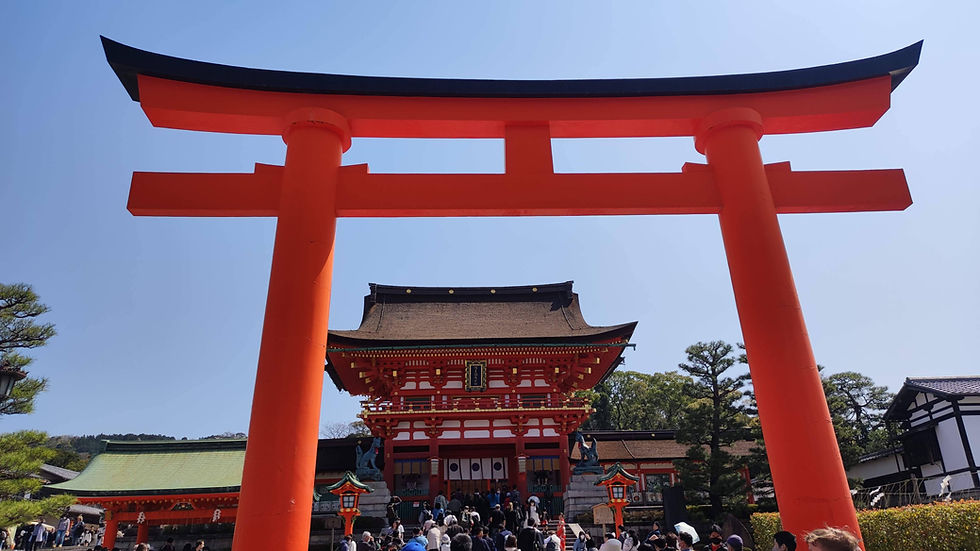
Then I begun my climb up to Mt Inari, following a trail between red torii gates and fox statues - the Shinto deity Inari is associated with foxes. The toriis are sometimes more separated and sometimes closer to each other, and the main crossroad divides the road going up and going down. That is also where most people queue for a photo. I bypassed this by walking along the mountain trail for awhile, as it was too crowded and cramped within the gates.
You will see that the further you go up, the less people are and is easier to walk and take photos.


It takes about 1-1.5 hours to reach up to the observation point, where there is a nice city view and a stop for drinks or snacks. You can walk around the top for about another 30 minutes before heading back down. As said there are many small shrines to explore and also souvenir and snack shops along the way so I took my time.

Overall I spent about 3.5 hours at Fushimi Inari Taisha area, taking into account the roundtrip to the mountain and time spent. From Inari station I boarded the train again for 30 minutes south to Nara station (the same Nara line).
Nara was once the capital of Japan, but a long time ago. It is home to several important shrines and temples, but most people go for the free-roaming deers at Nara park.
To reach Nara Park I walked for about 20 minutes east from Nara station. There is also a bus that takes 10 minutes. It is a very big park and you can easily spend the whole day exploring it. Deers are everywhere: taking a nap, walking around, even crossing the traffic light. You can buy deer biscuits and feed them, but beware they can be quite aggressive when hungry. When I visited I did not find them aggressive however, some did not even want to eat, probably as everyone was feeding them. It is also important to be careful of baby deers.
A funny thing is that they may bow to you when requesting a biscuit, in a Japanese way.


The main temple of Nara is Todaiji temple (800 yen fee), located within the park. It has the largest bronze Buddha statue of Japan.

Kasuga Taisha shrine is another one I really liked, a big more deep within the park. They often hold weedings and you may see one if you are lucky. The more deep in the park you go the less people there will be and they roam freely around the shrines.

We took the bus back to the station by around 5.30 PM to head back to Kyoto.
Day 4: Philosopher's walk, Nijo castle and more cherry blossoms
For my last day in Kyoto I started my day visiting Nijo castle, that was very close to my hotel.
Nijo castle is an UNENSCO world heritage castle built in 1603 as the Kyoto residence of the Tokugawa shogunate. Entry is 1300 yen. It has a black-and-white traditional castle exterior, surrounded by a canals, and the inside was bigger than I expected, I spent about 2 hours in total. The Ninomaru is the main palace building that hosts many paintings and rooms. Seiryuen garden surrounds the palace, Japanese-Western style tea-house.


If you have time you can visit the nearby Kyoto Imperial gardens as well, but I did not find it too impressive and think is best to leave it for future visits.
Then it was time to do the Philosopher's Path, at the east side of the city, probably what I was most excited about! It is a scenic 2 kilometer walking path at the Higashiyama district of Kyoto that runs along a canal. A 20th century philosopher used to walk along here, hence the name. It is probably the best place to appreciate cherry blossoms in Kyoto as they are lined up along the whole canal.

It passes through several historic temples and shrines, and as such you can start the route at the north, with Ginkakuji temple, or south, with Nanzenji or Eikando temples. If you have noticed, most temples in Kyoto have an entry fee of around 500 yen - some even more- so is good to check and prioritise which you want to go to!
For me I chose to start from the south with Nanzenji temple. It is one of the most important zen temples in Japan. Next to it only 5 minutes walk away is Eikando, one of my favorite temples. I visited its pagoda, inner temple and beautiful garden. It shouldl also be pretty for autumn foliage.
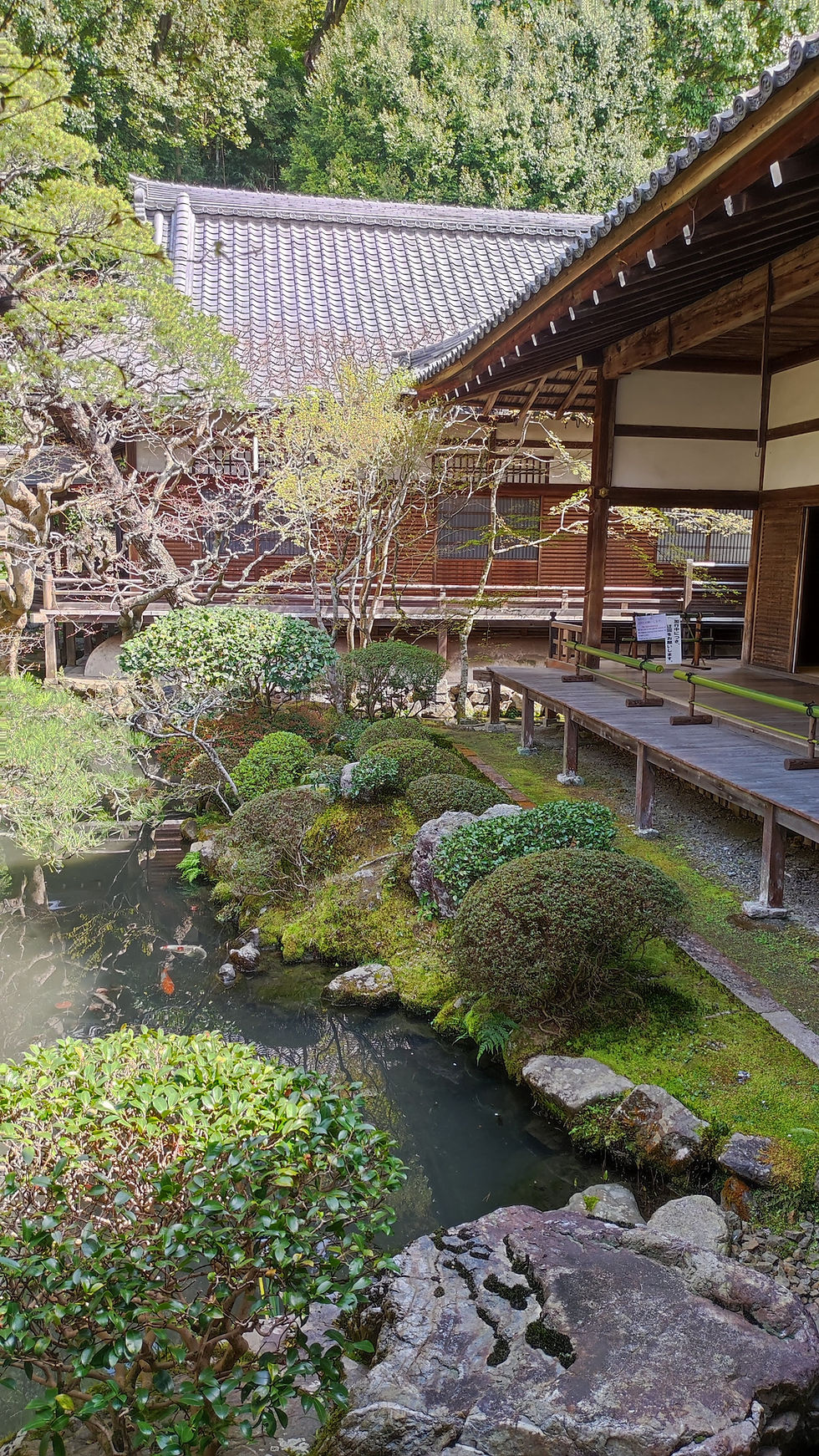


Continuing along philosopher's path I enjoyed the cherry blossoms and stopped for a coffee. At the end of the path I entered Ginkakuji. You may notice the similarity in meaning with Kinkakuj. "Gin" means "silver", while "kin" means "gold". The Silver Pavilion (Kannon-den) is a 2-story structure and while you also cannot enter it I could walk around the garden. I have to say Kinkauji was more impressive.

I chose not to visit other temples, but some suggestions would be Hone-in temple, or Heian Jingu Shrine that is a bit separated from the philosopher's walk - you can walk from Nanzenji if you finish there.
I returned back to Gion and Higashiyama district for night view and dinner to finish my Kyoto trip.
Day 5: Tasting Kobe beef
It was time to say goodbye to Kyoto. I would have definitely spent more time but I think 3 days is a good intro to the city.
Kobe is only 1 hour on the Tokaido-Sanyo shinkansen from Kyoto station, which is why there are also those who do a day-trip. Specifically the train arrives at Sannomiya station.
Kobe is the capital city of Hyogo prefecture, a port city, mainly known for its world-famous Kobe beef. Kobe beef comes from Japanese black cattle raised in the Hyogo prefecture, making it a rare treat, it is even said that they play music to them.
I left my luggage at my accomodation, 2no Home&Park, where I would stay for 2 nights. It was my first time in Japan staying at a capsule hostel, where I had my futon in a section of the dorm, but with a curtain and locker. The hostel was part of a cafe so you need to go through the cafe upstairs, quite funny. For hostels I think Japan has pretty high quality ones for low cost.
It is not only beef that Kobe has, and I wanted to proof that. 20 minutes west to the city I discovered Sorakuen gardens, a peaceful Japanese garden with a waterfall and pond.

On the way back I passed by Ikuta Jinja, an old shinto shrine.

From there I headed north, along a quite a steep road, to Kitano-cho. It has Japan's largest collection of western-style mansions and historic foreign residences from 19th to early 20th centuries. Back in those days many foreign diplomats used to stay here. You can visit many of these mansions interior for a cost, but I prefered to visit the exterior. The starbucks Kobe Kitano Jinkan also looks like a western mansion.
I walked up to Kitano Tenman shrine for nice views of Kobe surrounded by cherry blossoms.

After resting a bit in the hostel I met my Japanese friend, who I met during my Erasmus in London 5 years ago. It was pretty exciting to meet again after so long! She works in Kobe and it was a good opportunity for me to practice my Japanes. We of course had Kobe beef for dinner at Sannomiya area, the main commercial and restaurant area of the city. There are several degrees and proportional prizes of Kobe beef depending on the tenderness and part of the cattle it comes from.


As I am not one to notice too much difference we settled for an intermediate prize beef. Not only we ate it in its own but also as part of omurice - omelette with rice. Kobe has many westernised food too asides mansions.

Day 6: Arima Onsen and Kobe china town
In the morning we did a half-day trip to Arima Onsen. It is one of the oldest hot spring areas in Japan, one of the "Three Ancient Springs" of Japan. It is nestled within Mount Rokko north of Kobe. Another Japanese friend joined today too who was living in Osaka.
It took us about 40 minutes to reach Arima Onsen, from Sannomiya station changing at Tanigami station to the Kobe Dentetsu-Arima line. The final stop was at Arima onsen station.
Due to the cherry blossoms its riverside area was lively with stalls and people having a beer or a snack.

We walked around the village with many historic ryokans and onsen, we could smell the strong sulfur throughout the whole village.

We got into Arima Onsen Kin no Yu for a bath (650 yen fee), a "gold spring" with water colored yellow-brown from its high iron and salt content. Other onsen that are Ginsen, (銀泉), are "silver springs" that are colorless and contains radium and carbonate.
After a lunch menu set we headed back down to Kobe station, from where we walked to the port harbour. There is an amusement park and a ferris wheel. We walked along the port to the "Be Kobe" signpost, and then inside the city to the China Town. It is a pretty big hub for Chinese events in Japan, with many restaurants, shops and snack areas.


This concluded my trip to Kansai's Kyoto and Kobe. I took the shinkansen back to Tokyo around 5 PM.


Comments