Nikko: A Breathtaking Weekend Escape from Tokyo
- saracooperamun
- Apr 14, 2024
- 4 min read
Just 2 hours from Tokyo, Nikko is a captivating destination blending natural beauty and rich cultural heritage. The town is renowned for its UNESCO-listed shrines and temples, including the magnificent Toshogu Shrine. Beyond the iconic sites, Nikko has many natural wonders like the Kegon Falls and Chuzenji Onsen hot springs. As such, it is one of the most popular trips from Tokyo.
While those coming on vacation to Japan may choose to do a day-trip, I fully recommend staying at least 2 days, to also include an onsen experience. Even if you do not like onsen, 2 days allow you to both explore the temple area one day, and Chunzen Lake / Kegon Falls area the second. If you do not have 2 days, please choose only of the two areas.
As for transport, we booked the Nikko Pass. We got it from Klook directly. There are 2 options depending on your itinerary:
Nikko Pass - World Heritage Area: 2120 yen. If you only plan to visit the temple area
All Nikko Area Pass: 4160 yen. If you plan to visit Lake Chuzenji or Kinugawa Onsen area. It also covers the sightseeing cruise at the lake.
Note that the pass does not cover the fastest way to Nikko, so if you are in a hurry or doing a day-trip, it may not be worth it for you.
This was a group trip with 8 friends, during a weekend in May.
Day 1: Nikko's temples and onsen
To get the pass we only had to go to the station's Tobu office to redeem it. Specifically the Nikko Pass requires you to start the journey at Asakusa Station, where we redeemed the pass at Tobu Information Office, and take the Tobu-Nikko line to Shimo-Imaichi Station. Depending on the train it may take 1.5-2 hours. We then changed to another line to arrive at Tobu-Nikko station by around 12.30 PM.
Before starting exploring the city, we had some Yuba soba lunch, a specialty of Nikko, consistingn of tofu skin, just outside the station.

From there we walked about 20 minutes to Shinkyou bridge, a beautiful red bridge, one of the landmarks of the city. You can pay extra for crossing it too.

At the end we were already at Nikko's temple area, the main UNESCO heritage site. You can spend more than a day exploring the temples, all surrounded by green mountains and amazing scenery.
Nikkozan Rin'noji Temple consisted of a red buddhist temple, surrounded by ponds with red koi fish. It houses the "Hall of Three Buddhas" which features three large seated Buddha statues.

On the way to the next temple we passed by a pretty 5-story pagoda.

We walked to the most well-known temple next: Nikko Toshogu Shrine. It is the final resting place of Tokugawa Ieyasu, the founder of the Edo shogunate. It is a Shinto shrine known for its ornate and intricate architecture, including the famous carving of the "three wise monkeys". I have to say after being in Japan for more than a year, it is still one of the most impressing temples I have seen. Entrance is 1300 yen.

The last shrine we visited was Nikko Futarasan shrine, surrounded by ancient pine trees.
As most temples in Japan close by 5 PM latest - some even at 4 PM, we kind of rushed to see the last shrine, and there were also more we could have seen even! We did not have time but about 20 minutes walk from temple area you can find Kanmangafuchi Abyss, an area with buddisht monk statues, that looked nice.
We checked into our accomodation, an airbnb for all the 8 of us, about 15 minutes south from the station, and headed to an onsen for the night: Nikkowanoshiro Onsen Yashio Hot Spring. It cost 1200 yen per person, and had a nice outdoor onsen, it was also not too crowded. Most people who spend the night at Nikko may go to rural onsen areas like Kinugawa Onsen or Oku-Nikko Yumoto Onsen, most easier to get to area by public transport.
A lesson we learned is that buses run out early in the countryside, it is not common to find them after 6 PM, in some areas even 5 PM.... thankfully as it was 8 of us, we rented two taxis and it was relatively cheap, but it is good to check bus timetablels beforehand.
Day 2: Lake Chunzeji and Kegon Falls
The second day was dediated to explore the Lake Chuzenji area. As mentioned earlier, I strongly recommmend not coming here unless you have 2 days, as there is a lot to see.
It took us about 40 minutes by bus from Nikko station to Chuzenji Onsen station.
From there we walked for about 5 minutes to Kegon Falls. It is considered to be one of the 3 most beautiful waterfalls in Japan, with water fed by the nearby Lake Chuzenji, and a fall of 97 meters. It cost 550 yen per adult, and we could get appreciate the waterfall from two observation points of different heights. In autumn, it is said to be surrounded by beautiful autumn foliage.
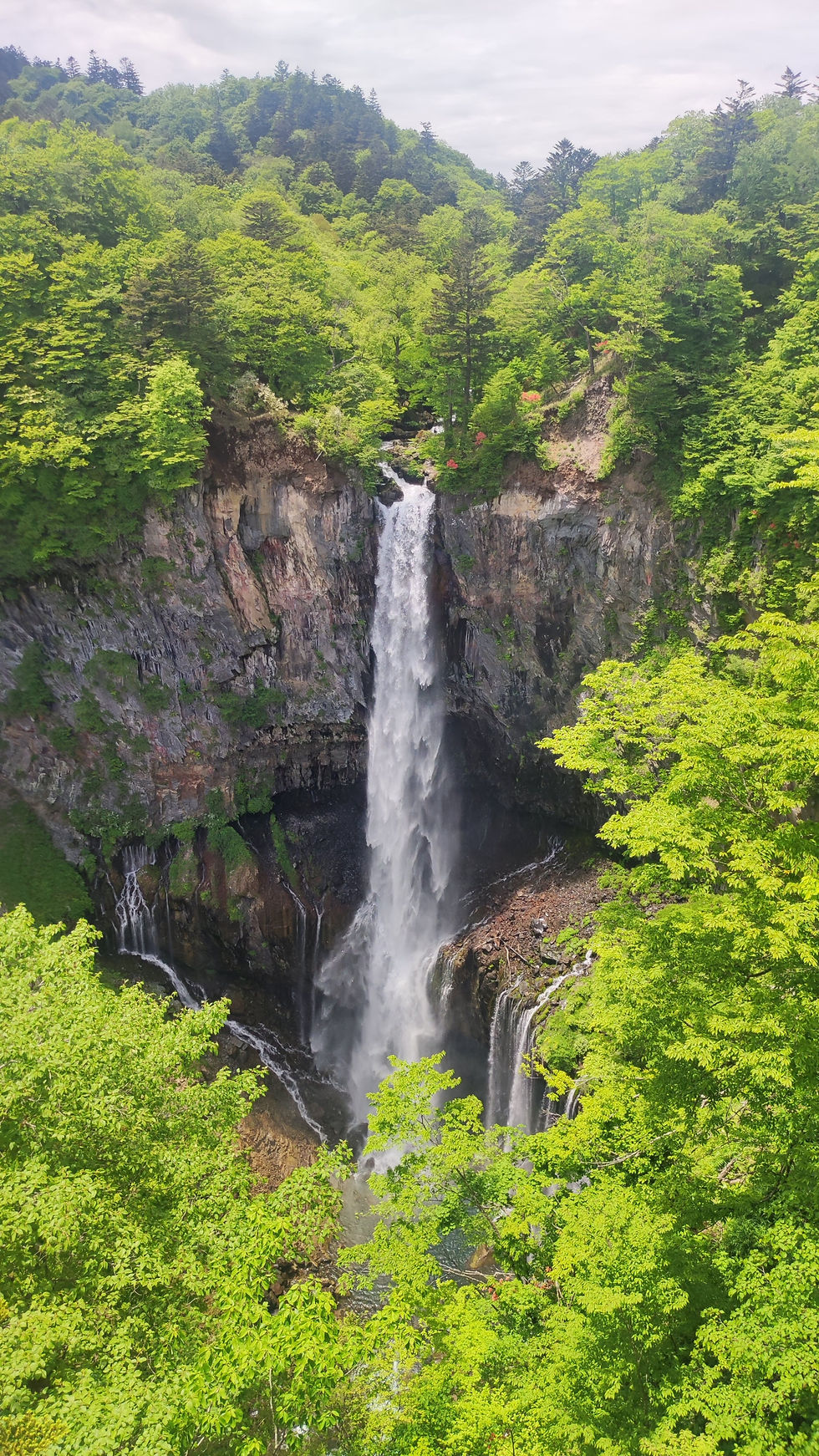

Next we walked to Lake Chuzenji. It was created over 20000 years ago when Mount Nantai erupted. We walked around the lake, actually you can circle its whole 25 km perimeter, but we only did a part of it.

There are several sights along the way we stopped at, such as Mt Futara Shinto Shrine, or Chuzenji Temple.

You can also take a sightseeing boat around the lake, included with the All Nikko Area Pass, although we did not have time. If you have time, you can also take the Akechidaira Ropeway, although the cost is separate (600 yen one-way), to have a good view of the lake.
Continuing north along the lake, you reach Oku-Nikko Yumoto onsen area. For us as we spent quite a bit of time around the lake, we did not go.

Around 5 PM we took the bus back to Nikko station to head back to Tokyo.
As you can see there is plenty to see in Nikko, I would definitely go back to visit more of the onsen areas and other temples we did not have time to see, even going at different seasons must be amazing to see it differently.


Comments