
Summer week in Hokkaido
- saracooperamun
- Apr 4, 2024
- 11 min read
Updated: Apr 11, 2024
It is no joke that summers in Japan are unbearable. For the most part of Japan, at least. Which is why when my mum came to visit me in Japan, also disliking hot weather like myself, travelling as north as possible was my idea of vacation. While most people think about Sapporo Snow Festival and skiing here, which for sure must be great too, summer in Hokkaido means cooler weather, flowers, and breathing opportunity.
From Tokyo, the easiest way to get to Hokkaido is by plane, just under an hour to Sapporo. It is definitely cheaper than the shinkansen, although you miss on the scenic journey. The shinkansen takes 4.5 hours from Tokyo to Hakodate (the southern part of Hokkaido), but then you need to change to another train for 3 more hours to Sapporo, so it really depends on your itinerary. It also costs over 20000 yen.
There is also a Hokkaido specific rail pass for non-resident foreigners, but like all passes, you should calculate if the cost is worth it. For us, as I was a resident and could not take it, we opted not to.
This itinerary was done from end of July to beginning of August, from a Saturday to Sunday (8 days in total) with my mum. For us, we chose to fly to go and take the train to come back, doing a circular itinerary where we would finish at Hakodate to take the shinkansen back. We stayed at the following places:
Sapporo: 4 days and 3 nights. 2 day trips to Furano and Otaru.
Noboribetsu Onsen: 1 day and 1 night
Lake Toya: 2 days and 2 nights
Hakodate: 1 day and 1 night
Day 1: Flying to Sapporo
We took the early flight from Narita airport to Sapporo with Peach Airlines. Note with budget airlines the maximum hand-luggage should weight 7 kg, including any smaller handbag. We were not aware that the weight included all packs, and at the gates, they were weighting all the things and charging extra per kilo. It was not an exorbitant cost, but is good to know beforehand.
Arriving by 2 PM to Sapporo station, we checked in our hotel for 3 nights: Fino Hotel Sapporo Odori. It was walking distance to most attractions within the city. It was then time to explore the city!
We passed by Tanukikoji Shopping street from the hotel, where there was a big Sapporo mascot hanging - it is quite typical during summer months.

15 minutes away we reached Sapporo TV Tower, one of the main landmarks of the city. It looked like a replica of Tokyo Tower with a mix of red and white, but smaller. We could only go to the first floor for free, where there is a souvenir shop, while it cost about 1000 yen to go up the observation tower. Due to the smaller height we did not think it was worth it. There were flowers in the surrounding Odori Park, the central park of the city.

Continuing the walk north we passed by Sapporo Clock Tower before returning park to the park, as there was a huge beer festival as part of summer festivals, which we were quite happy about. They had all Japanese beers: Sapporo, Asahi, Kirin, Suntory. All had their own tent and also food, it was very lively.

For dinner we went south to Susukino, the night hub and similar to Shinjuku in Tokyo.
Day 2: Day-trip to Furano Lavender fields
In the summer, the main highlight of Hokkaido are its seasonal flowers, mainly lavender but lupines, tulips, sunflowers or cosmos. Furano is an area situated in a valley surrounded by mountains, about 2.5 hours by train or car from Sapporo. As we wanted to several places we chose to book a tour with Klook, specifically Hokkaido Furano Tomita Farm Tour With All-You-Can-Eat Melon Option.
The bus pick-up was in Odori park, just 10 minutes from our hotel, and we were soon on the road. The guide gave us a lot of insight on Hokkaido but also on different Japanese traditions, some a bit more controversial than others but interesting nonetheless.
The first stop after 2.5 hours was the lavender fields in Shikisa no Oka. It is a 14-hectare flower garden in Biei. As in July and August lavender is in full bloom, the hills are transformed into a multicolored carpet, together with other flowers. You could rent a small car to move around, but we prefered to walk, even if we could not cover the whole ground in the 1.5 hours we were given.


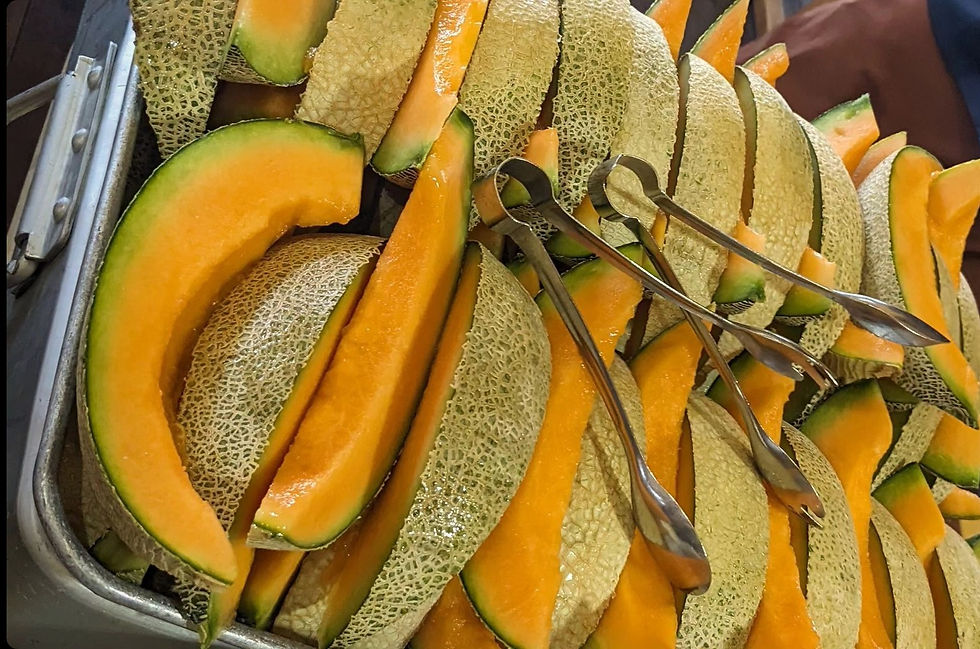
Lunch was buffet-style, including all-you-can-eat melon. The Yubari King Melon of Hokkaido is considered to be one of the best in Japan and it was very sweet.
In the afternoon, we headed to Farm Tomita, with extensive lavender fields. There were quite more people here. You can buy lavender related products and see how it is picked up and produced to make things like cosmetic creams.


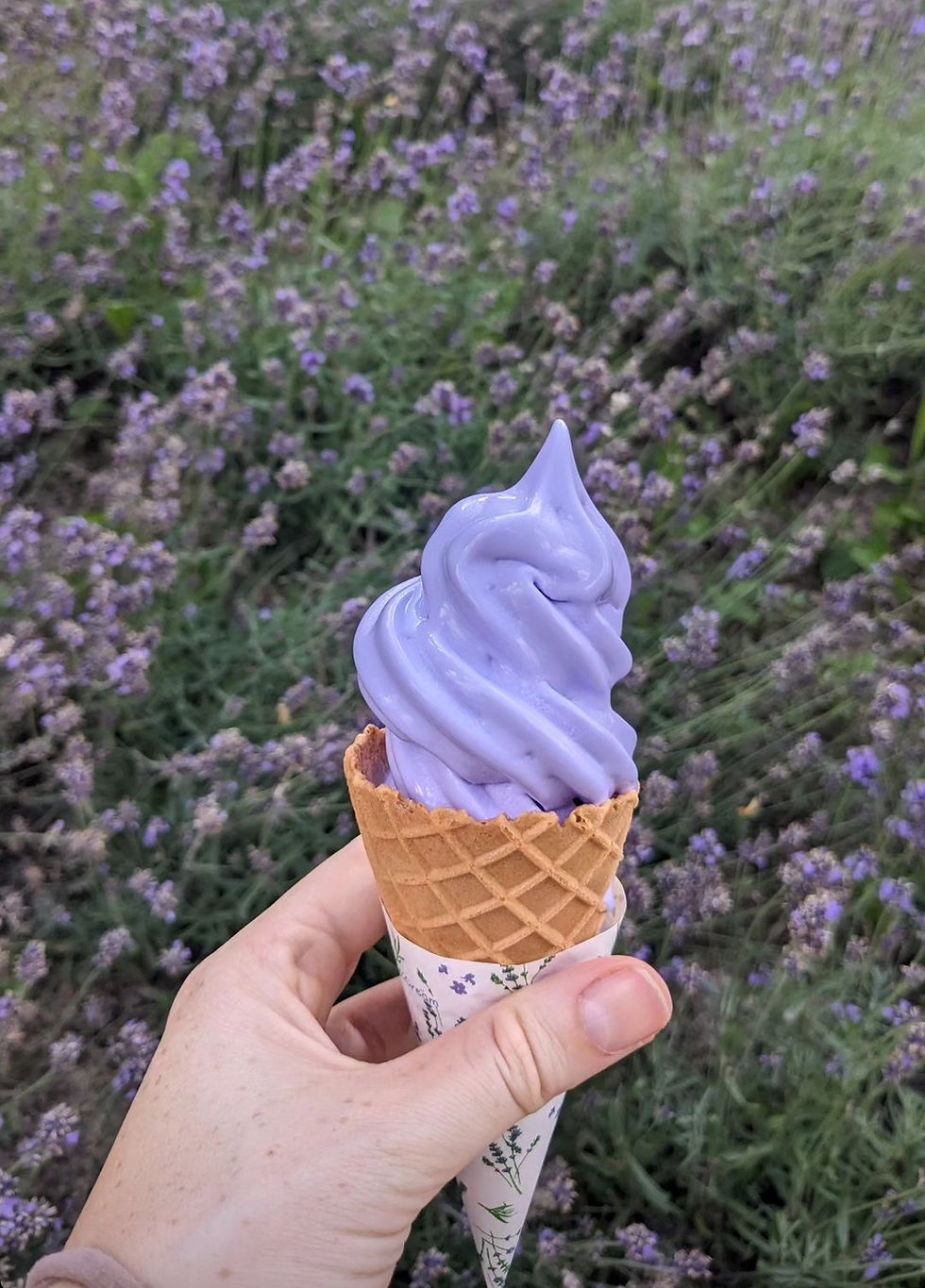
They also have lavender ice cream, that was quite tasty. But as we mistook the return time for the bus, we had to rush to finish it - we could not bring the ice cream to the bus, but there were also no rubbish bins, so it was quite a dilema.
The final stop was Ningle Terrace, a rather peculiar place as it consisted of shops inside wooden huts in the middle of a forest.

We were very happy with the day trip, could have spent a night or two there as well, but without a car it would have been more difficult. The sunny weather was also a big plus.
Day 3: Day-trip to Otaru
Otaru is a port city located on the coast of the Sea of Japan, known for its beautiful canal with wooden warehouses at both sides. We reached it by public bus under 1 hour, paying with our Suica transport cards.
Weather was not as good as they day before, it was cloudy with some rain during the day.
We got off the bus near Otaru station, and it was only 10 minutes walk to Sankaku fish market. It was a narrow but long alley selling all kinds of seafood, including huge Red King crabs of Hokkaido. There were many fish alive including the crabs and once ordered they would prepare them for a meal, it was a bit too much for us.

Walking towards the port, we passed by the old railway. No train goes past there now so people walk along it as they take photos. There were also many small alleys on the way.

The Otaru canal is the main landmark of the city, with boats roaming around a little Venice. Otaru is another place that becomes a winter wonderland in winter, and I am sure it must also be beautiful then.


The warehouses around the canal included the Otaru Beer Otaru Warehouse, where you can taste the local beer in the big complex or at the terrace facing the canal. The street parallel to the canal is Sakaimachihondori Street, a shopping street with many kind of sweets and snacks that we spent quite a big of time on. Our favorites were the cream puffs. At the end of the shopping street we visited the Antique Museum, an old music box store. Every certain hour there is a musical performance as well.

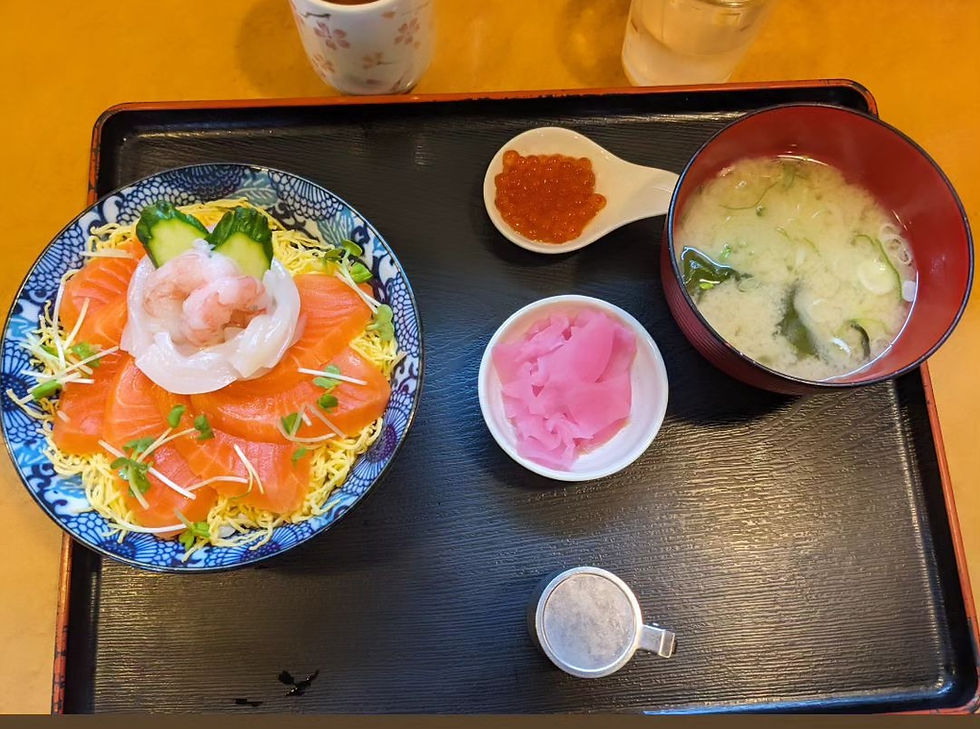
We also had a "teishoku" set meal and Manjiro with fresh fish and seafood on rice (donburi).
Glass production is extensive in Otaru as well, and there are many shops selling glass in different shapes. For sure you could spend a long time checking all the shops.
We took the bus back to Otaru by around 5.30 PM and went to a peculiar late-coctail place called Milk Mura. We got a tasting of different coctails, crep and ice cream. You basically pour the coctail liquid on top of the vanilla ice cream and eat it slowly.

Day 4: Sapporo Beer Museum and fish market
The last day in Sapporo was reserved to visit other points of interest within the city. Unfortunately it was a rainy day so we had to take it slow.
In the morning we visited the Hokkaido Ainu Center, about 15 min walk north from our hotel. Ainu are indigenous ethnic group native to the northern regions of the Japanese archipelago, particularly the island of Hokkaido. They have a distinct language and culture but face many struggles. As we are from the Basque Country and also a minority language and cultural area, we were particularly interested in learning more about then.
Opposite the center was Botanic Garden Hokkaido University, but perhaps due to rain and lack of flowers I can't really recommend it. We headed to Nijo market around lunchtime, a big fish market, and had an amazing crab donburi and other seafood at Ohiso restaurant.

In the afternoon, we took the bus to Sapporo Beer Museum, where we learned about its beer history, and have a tasting of 3 types of Sapporo beer. We were quite lucky as at 4 PM was the last order for the beers, we did not know it before.


This concluded our visit to Sapporo. Almost every evening we would finish at the beer festival which was a highlight of the trip. It was funny how it ended at 9 PM - pretty early for anyone- and staff would dance and subsequently start turning off lights and kicking people out.
Day 5: Noboribetsu Onsen and Hell's Valley
Our next stay was in Noboribetsu. We took a direct bus with Donan Bus leaving from Sapporo station, costing 2200 yen only, and taking about 2 hours. There is also a train option, but as we did not have a rail pass and there was not that much difference in the duration bus seemed like a good option.
It was 10 AM when we arrived to Noboribetsu Onsen. It is the largest hot spring town in Hokkaido, with onsen that were formed from volcanic activity of 10000 years ago. We spent 1 night at Noboribetsu Manseikaku, a ryokan, just 5 minutes from the bus stop in the center of the onsen village.
It was pretty hot that day, I have to say that in spite of hoping to escape the humid summer of Japan, the days were being tougher than expected due to the weather. Mainly this day, as crossing the village, we arrived to Jigokudani, "Hell's Valley". It is a volcanic valley with steaming vents, sulfurous fumes, and a apocaliptic landscape that was once believed to be inhabited by demons.

We could see several demon statues ("oni" in Japanese) on the way. And of course due to the sulfur and the scorching sun, it was even more tiring to walk!


The trail continued further from the main Jigokudani area to Oyunuma Pond, a blueish hot pond were fumes come out as well, about a 30 minutes walk away.

Another 10 minutes away there was a nice river footbath (Oyunuma River Footbath), with many locals stopping buy. The water came straight from the pond, and it was really hot! We only managed to stay for about 15 minutes. Remember to take a small towel for this!

Arriving back to the town, we took advantage of the ryokan's onsen and had its buffet dinner. In the evening we went out for another strol in our summer yukata robes, with many others having a walk as well, and saw some more demons. There was once that changed its face from a normal human to a demon, it did scare me a bit.

While nice, compared to other onsen towns like Kurokawa Onsen in Kyuushu, I would not rate it too high.
Day 6: Learning about Ainu at Upopoy and Lake Toya
This day was a bit more spontaneous, as the journey to the next stop was short, so we decided to do a stopover at Upopoy for half a day. We took a bus taking 30 minutes from Noboribetsu Onsen, that stopped just in front of the entry.
In Sapporo we had already briefly visited a musem about Ainu people, but Upopoy is a new facility opened in Shiraoi specifically build to reviving and preserving the Ainu culture of Hokkaido. Entry cost 1200 yen, and is a very large space. We visited the museum building to learn about Ainu history, and then did several workshops, our favorite were Ainu performances with traditional music and dance, and workshop to learn how to play some instruments. The different sections are in a sparse park that has a lake in between.


We also had the chance to try traditional Ainu clothes inside local wodden houses.

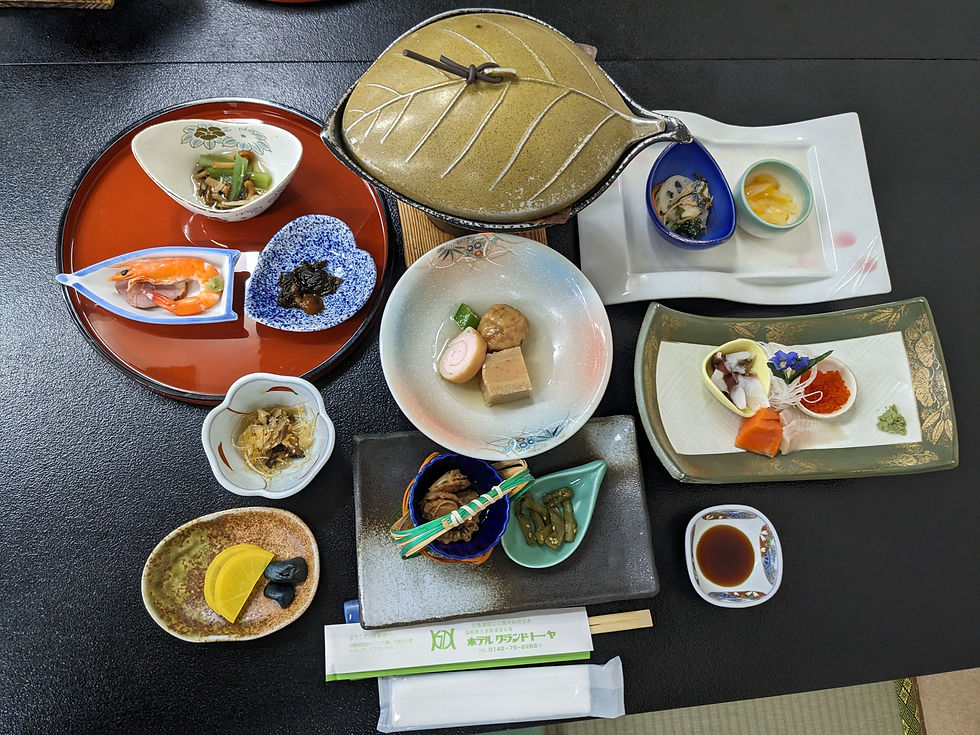
We left the museum at around 3 PM to head to Lake Toya. For this we took the Hokuto shinkansen line to Toya station (50 minutes), from Shiraoi station. Then we switched to a local shuttle bus to Toyako Onsen (20 minutes). We were staying 2 nights at Hotel Grand Toya, a beautiful ryokan with lake view. Its onsens and meals were also great, considering it was very cheap. There are many other ryokan and hotels around the lake, most quite more costly, and seemed a popular place to go for summer.

Lake Toya is part of Shikotsu-Toya National Park, and was formed millions of years ago due to eruptions from the nearby volcano Mt Usu. It is quite big with a 70.7 sq km.
After dinner we went out in our yukatas and saw the lake fireworks. During summer, Japan is full of "hanabi" fireworks. But while in Tokyo everywhere it is overcrowded, here around the lake it was only those of us who were staying overnight. The fireworks were thrown from boats that were moving fast around the lake, throughout the whole diameter, which was amazing. You could also get on a cruise for better view, but we were happy from the side.
Day 7: Usuzan Ropeway and Lake Toya cruise
After breakfast at the ryokan and quit dip in the onsen, we took a bus that followed the sideline of the lake to the east side, to then walk for about 30 minutes to the start of Usuzan Ropeway. It is a gondola that takes you to the top of Usu volcano, which created Lake Toya. It costs 1200 yen for a round-trip ticket and only 6 minutes to go up to the top.

There is a cafe and also a terrace with views to the lake and surrounding mountains.


We also had a walk around the summit, there are different trails to approach the crater and other areas.

After an hour and a half, we headed back down. This time, as it was lunchtime and very hot, we chose to share a taxi with another mother-daughter back to Lake Toya.
In the afternoon, we took a cruise around the lake (abotu 1500 yen), for about 2-3 hours. Not only could we see the lake but also the main smaller islands within it. The ferry also stops at a bigger island and we could have a walk around its forest and shrines.


That evening we saw the fireworks again, as they run every night over the summer.
Day 8: Hakodate, the last stop
Last but not the least, we took the Hokuto shinkansen from Toya station to Hakodate (2 hours), from where we would take the shinkansen back to Tokyo the next day. We stayed at Flexstay Inn Hakodate Ekimae, conveniently located in front of the station.
After leaving our luggages we went for some lunch to Ekini seafood market. It was similar to the one in Otaru but bigger and with way more fish alive than dead, that was quite sensitive.
From there about 15 minutes walk we started seeing the famous Red Brick Warehouses of Hakodate, also resembling those of Otaru – but many more here. All warehouses had something different inside, from a beer hall to souvenir shops to bakeries.

Instead of spending too much time there we had some cream puffs at Mama de Core nearby, they also had chocolate and matcha puffs too.

From there it was a steep slope to Motomachi district, with a combination of Japanese and Western architecture. There were many churches and western buildings like the Old Public Hall.


We ran into the couple of Lake Toya by coincidence too! It was also a nice place to appreciate the view of the port city.


Finally, we took the ropeway from Motomachi district to Hakodate mountain. The night view was supposed to be especially nice, and while we did see the day view, as time passed by it was getting foggier and foggier, until everything was white! I could not understand why people were insistent on taking photos to the clouds. It also cold pretty cold, and we had to queue for the bus to come back down. Thankfully we made it back okay, and had our last dinner at Lucky Pierrot, an old-style hamburger place.


The next stay we took the early shinkansen back to Tokyo, taking 4.5 hours.
It was definitely a packed week, but I definitely think a week is necessary for Hokkaido! Coming in winter must be a totally different experience too.


Comments